Commercial Solar Solutions for Buildings.

Lower energy costs. Reduce emissions. Take advantage of financial incentives.

With rising electricity costs, stringent compliance standards to reduce greenhouse gas emissions, and generous financial incentives available at the federal, state and local levels, solar energy offers a practical way for buildings to future-proof their property.

Energo partners with property managers, building owners, as well as condos and co-ops to design and implement solar systems that deliver measurable financial returns.

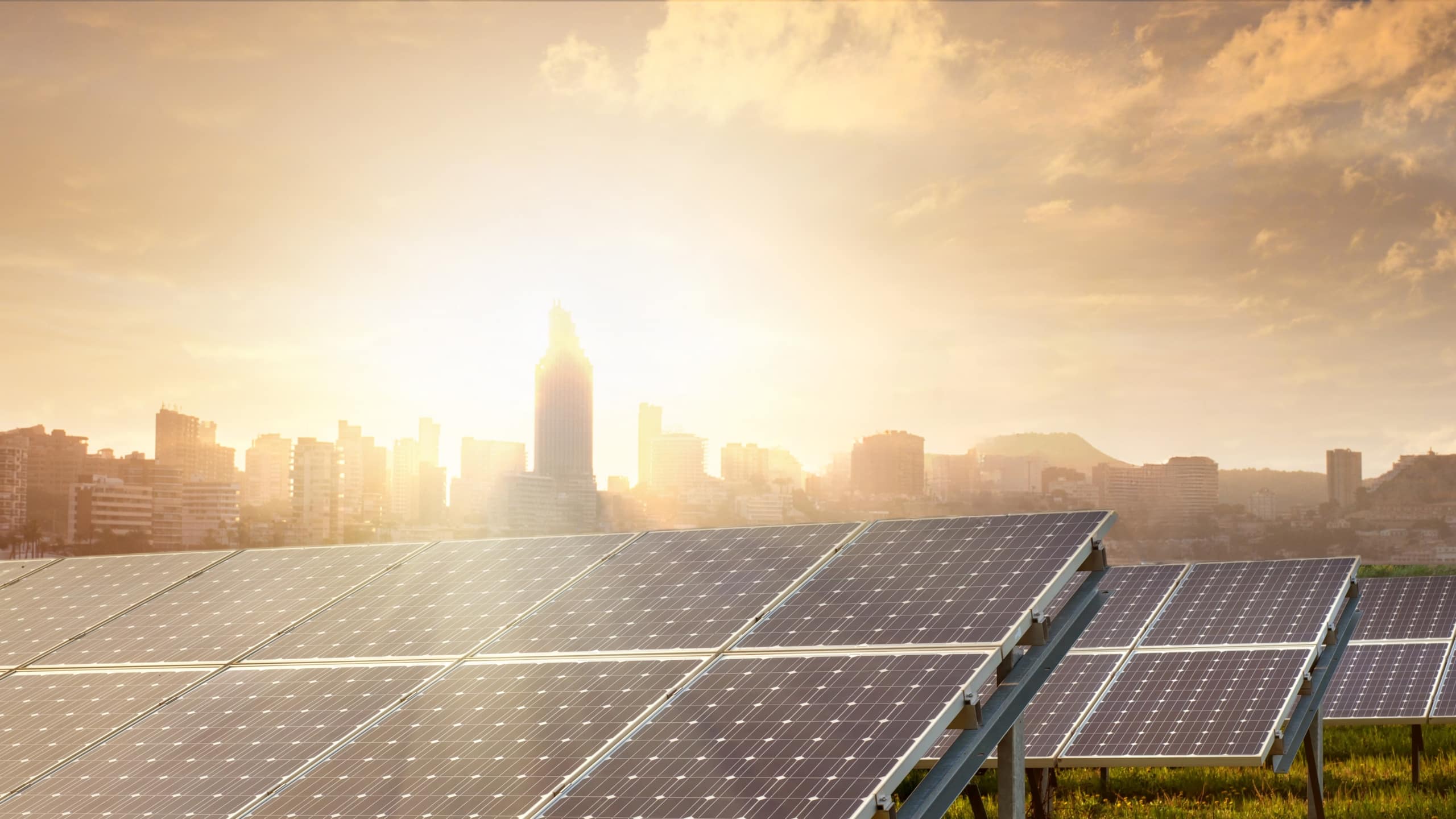
Solar panels with a city skyline in the background

Our Commercial Solar Installation Services.

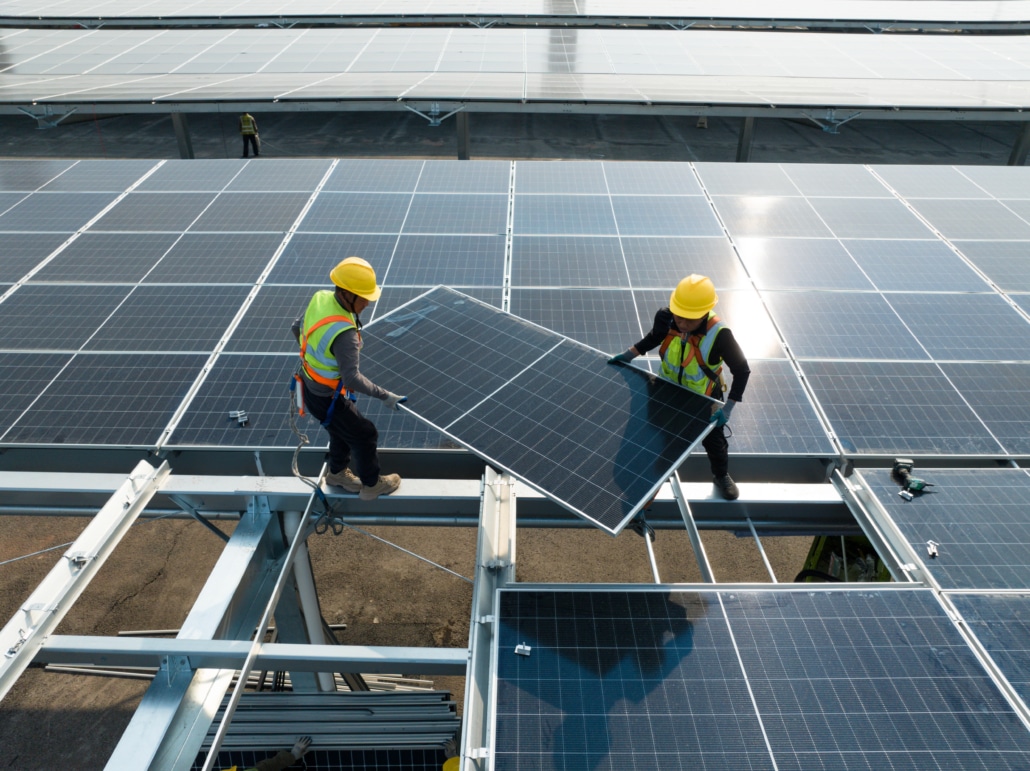
From system design to installation and long-term performance, our solar services are built to support your building at every stage. We take a comprehensive approach, aligning energy savings with your property’s structure, usage, and goals. Everything is handled under one roof for a seamless experience.

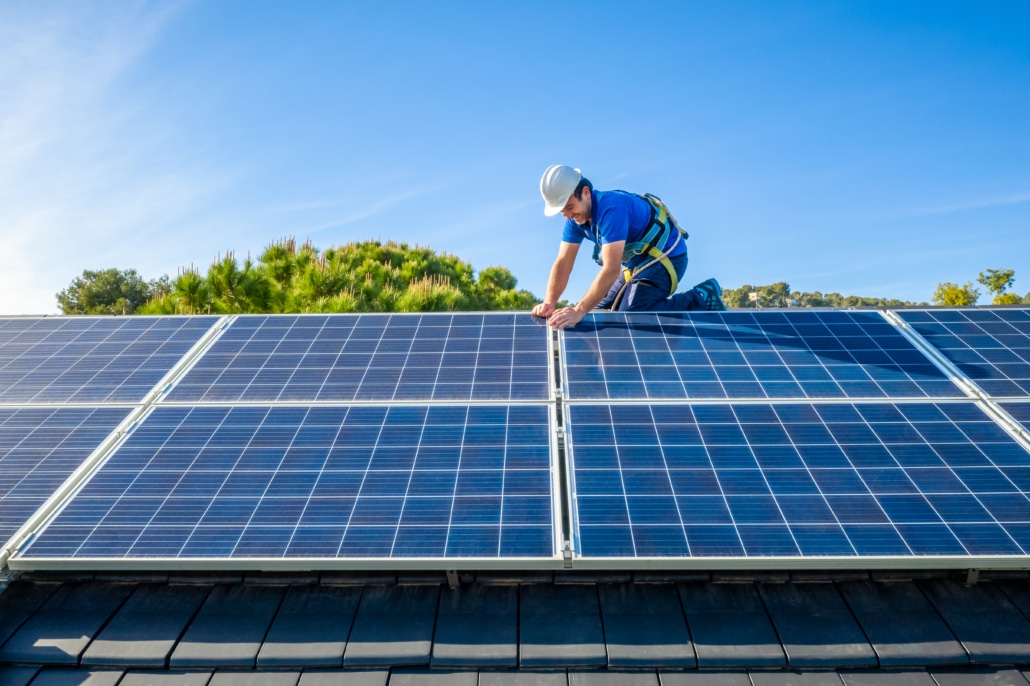
Worker cleaning rooftop solar panels

Our Solar Installation Process.

From property assessment and design to permitting, installation and inspection, our team of experts ensures your project is seamless.

What we provide:

  • Property and usage analysis
  • Custom system design based on load and roof constraints
  • Incentive and tax credit guidance
  • Coordination with building operations
  • End-to-end project management

Financial Benefits & Incentives of Solar in New York.

New York’s solar incentives and rebates are among the most generous in the country – making it easier and more affordable than ever to go solar. For commercial property owners, these programs can help reduce upfront investment, improve long-term ROI, and make solar a stronger financial decision for the building.

INCENTIVE DETAILS
Federal Income Tax Credit
30% of your total system cost can be claimed as a federal income tax credit. To qualify, commercial projects must either start construction by July 4, 2026 and be completed within four years, or be placed in service by December 31, 2027.
Accelerated Depreciation (MACRS)
Commercial solar systems qualify for MACRS (Modified Accelerated Cost Recovery System), which allows businesses to depreciate a solar installation over 5 years, rather than the standard 39 years for commercial properties. This generates substantial tax savings on top of the income tax credit.
NY State Solar Rebate
The NY-Sun Megawatt Block Rebate is run by NYSERDA. It divides the state into regions with designated megawatt allocations. The exact incentive amount depends on project size and location, and incentives are structured to phase out overtime as more New York businesses install solar.
NYC Solar Property Tax Abatement
Meant to encourage the adoption of solar energy throughout the city, the NYC Solar Property Tax Abatement covers 30% of your installation costs and reduces your property tax bill over 4 consecutive years.

Most NYC commercial solar projects combine multiple incentives, significantly reducing total system cost depending on your building and eligibility. Energo can help you understand which programs may apply to your property and what your estimated cost could look like after available savings.

Go Solar The Way That Works For Your Business.

Every property, portfolio, and capital plan is different. Energo offers flexible pathways to solar—so you can choose the structure that aligns with your financial and operational goals.

Cash Purchase – Pay for your system upfront to maximize long-term returns. Ownership allows you to capture all available tax credits, depreciation benefits, and incentives—while significantly reducing operating expenses over the life of the system.

Financing – Preserve capital while still realizing the benefits of solar. Through our trusted financing partners, you can implement solar with minimal upfront investment and pay over time—often offsetting costs with energy savings.

Why Should I Consider Solar For My Commercial Building?

For commercial property owners, solar does more than reduce your electricity bill and enhance tenant appeal. It can improve operating performance, support long-term property value, and help reduce exposure to rising energy costs. Solar can also play a role in building compliance planning as emission rules continue to evolve.

Lower operating costs

Solar offsets a significant portion of your building’s utility expenses with energy your roof generates, reducing costs that persist for the life of the system.

Higher asset value

Lower operating expenses increases your net operating income, which directly increases your building’s appraised value. Few capital improvements pay for themselves while also improving the asset.

NYC compliance protection

Local Law 97 imposes escalating carbon penalties on large buildings through 2030 and beyond. Solar reduces grid consumption, cuts emissions, and limits your exposure to those fines.

Strong incentives

The federal commercial investment tax credit, accelerated depreciation, the NYC Solar Property Tax Abatement, and NY-Sun rebates collectively subsidize a substantial portion of your system cost. Though, this window won’t stay open indefinitely.

Long-duration returns

A commercial solar system can perform for 25–30 years, allowing savings, asset improvement, and compliance benefits to compound over time. Current incentives can make the economics especially favorable, but that window is limited.

Energy cost control

Solar gives commercial property owners greater control over long-term energy costs by reducing reliance on utility rate increases. By generating a portion of your building’s electricity on-site, you can create more predictable operating expenses and reduce exposure to market volatility over time.

Does NYC Require Solar When Replacing a Commercial Roof?

Yes, it can. If your NYC building is undergoing new construction, a horizontal or vertical enlargement, or replacement of the entire existing roof deck or roof assembly, Local Law 92 and Local Law 94 may require a sustainable roofing zone. That zone must be covered by a solar photovoltaic system, a green roof system, or a combination of both.

For many commercial buildings, solar is one of the most practical ways to satisfy the requirement, especially when roof work is already being planned. A compliant solar PV system must generate at least 4kW, and certain roof areas may be excluded from the sustainable roofing zone, including mechanical equipment areas, rooftop structures, access pathways, and other qualifying conditions.

Planning early matters. If LL92/94 applies to your project, adding solar after roof design or permit planning has already begun can create delays, redesign costs, and missed incentive opportunities. When solar is evaluated before filing, building owners can better coordinate compliance, system design, available roof space, and potential incentives such as the federal Investment Tax Credit, MACRS depreciation, and the NYC Solar Property Tax Abatement.
Energo evaluates each commercial solar project for LL92/94 applicability during the site assessment. If your planned work triggers the requirement, we can help design a solar solution that supports compliance, improves long-term energy performance, and helps your building take advantage of available incentives.

Frequently Asked Questions About Commercial Solar in NYC

Answers to the questions building owners and property managers ask most before going solar.

Can NYC commercial solar incentives be combined?

Yes — and stacking incentives is one of the most powerful ways to reduce your net cost. NYC commercial solar projects can typically combine the federal Investment Tax Credit (ITC), which covers 30% of system costs, with MACRS accelerated depreciation (5-year schedule), the NYSERDA NY-Sun Megawatt Block rebate, and the NYC Solar Property Tax Abatement. Each incentive has its own eligibility rules, but most commercial properties qualify for all four simultaneously. The combined effect can offset 60–70% of total installation costs in some scenarios. A tax advisor familiar with commercial solar incentives can confirm how much of each benefit applies to your specific situation.

How long does commercial solar take to pay for itself in New York City?

Most commercial solar systems in New York City reach payback in 4 to 7 years, depending on system size, available roof space, current electricity usage, and which incentives are applied. Con Edison commercial rates of $0.25–$0.30+ per kWh mean that every kilowatt-hour your system generates directly offsets a high-cost purchase. After payback, systems typically produce power for 25 to 30 years — meaning 18 to 25 years of near-free electricity. Buildings with higher daytime energy consumption, flat rooftops, and southern exposure tend to see the fastest returns.

Who qualifies for the NYC Solar Property Tax Abatement?

The NYC Solar Property Tax Abatement (PTA) is available to building owners who install a solar electric generating system on a New York City property. It provides a property tax reduction of 7.5% of installation costs per year for four years — up to a maximum of $250,000 total. Eligible properties include commercial buildings, multifamily residential buildings, and mixed-use properties. The system must be new (not a re-installation), the building must be current on property taxes, and the application must be filed with the NYC Department of Finance within the required window after installation. Cooperative and condominium buildings may also qualify, though the abatement structure differs slightly for co-ops.

Does solar alone satisfy Local Law 97 requirements?

Solar can meaningfully reduce your Local Law 97 emissions liability, but whether it satisfies your building’s full obligation depends on your emissions baseline and your system’s output. Local Law 97 penalizes NYC buildings over 25,000 square feet for carbon emissions that exceed set thresholds, with fines of $268 per ton of excess CO₂ equivalent. A well-sized rooftop solar system directly reduces your grid electricity consumption and, therefore, your Scope 2 emissions. For buildings close to their threshold, solar may be sufficient. For buildings with larger gaps — common in older, energy-intensive properties — solar is most effective as part of a broader compliance strategy that may include HVAC upgrades, lighting retrofits, or heat pump conversions. Energo can model your building’s current emissions profile and identify how much solar offsets your LL97 exposure.

Can condos and co-ops in NYC install commercial solar?

Yes. Condominium associations and housing cooperatives in New York City are eligible for commercial solar installations on shared rooftops. The electricity generated can offset common-area loads — elevators, hallway lighting, laundry rooms, mechanical equipment — which reduces operating costs and common charges. Co-ops and condos can also access many of the same incentives as other commercial buildings, including the federal ITC and the NYSERDA NY-Sun rebate. The ownership structure affects how certain benefits like the NYC Property Tax Abatement are applied, so it’s worth confirming the specifics with your installer and tax advisor. Board approval is typically required, and Energo can provide materials to support that process.

How long does a commercial solar installation take from start to finish?

A typical commercial solar project in New York City takes 3 to 6 months from signed contract to energization. The timeline breaks down roughly as follows: site assessment and system design (2–4 weeks), permit and interconnection applications with Con Edison (6–12 weeks, the longest step), equipment procurement and scheduling (2–4 weeks), and physical installation (1–5 days depending on system size). Larger rooftop systems or buildings with complex electrical infrastructure may take longer. Energo manages the entire permitting and interconnection process on your behalf, which is the most common source of delays when working with less experienced installers.

What should I look for when evaluating my building’s solar readiness?

Four factors determine how well a building will perform with solar: roof condition, available unshaded area, structural load capacity, and electrical system capacity. The roof should have at least 10–15 years of remaining life — installing solar on a roof that will need replacement in a few years means extra cost to remove and reinstall panels. Unshaded south- or west-facing roof area maximizes production; mechanical equipment, skylights, and neighboring buildings all reduce usable space. The roof structure must support the added weight of racking and panels (typically 3–5 lbs/sq ft).

Finally, your building’s electrical service and main panel must be compatible with the inverter and any net metering configuration. Energo conducts a full site assessment to evaluate all four factors before recommending a system design.

Is now a good time to install commercial solar in NYC?

For most commercial property owners in New York City, the window right now is unusually favorable — for three reasons. First, the federal Investment Tax Credit is currently at 30%, but proposed federal budget changes have created uncertainty about its long-term future; locking in a system now guarantees you capture the full credit.

Second, the NYSERDA NY-Sun Megawatt Block incentive is a declining block program — rebate rates step down as capacity is claimed, so earlier applicants receive higher per-watt incentives than later ones. Third, Con Edison electricity rates have climbed steadily, meaning each kilowatt-hour your system produces is worth more today than it was two or three years ago. Buildings that install in 2025 or early 2026 are positioned for the best combination of high incentives and high utility offset value.

Ready to See What Your Building Qualifies For?

Our team will assess your property, walk you through available incentives, and give you a clear picture of what solar could look like for your building.


*Solar Services are available through Aegean Energy, a licensed subsidiary of Energo.

© 2026 Energo. All rights reserved. NYC Licensed Master Plumber #1608   ·   NYC Licensed Master Electrician #12165 Privacy Policy | Terms & Conditions