Is Your Building Due for Local Law 152?
Energo’s team of in-house Licensed Master Plumbers and trained technicians are certified and fully equipped to perform Local Law 152 inspections and file all necessary paperwork to ensure compliance.
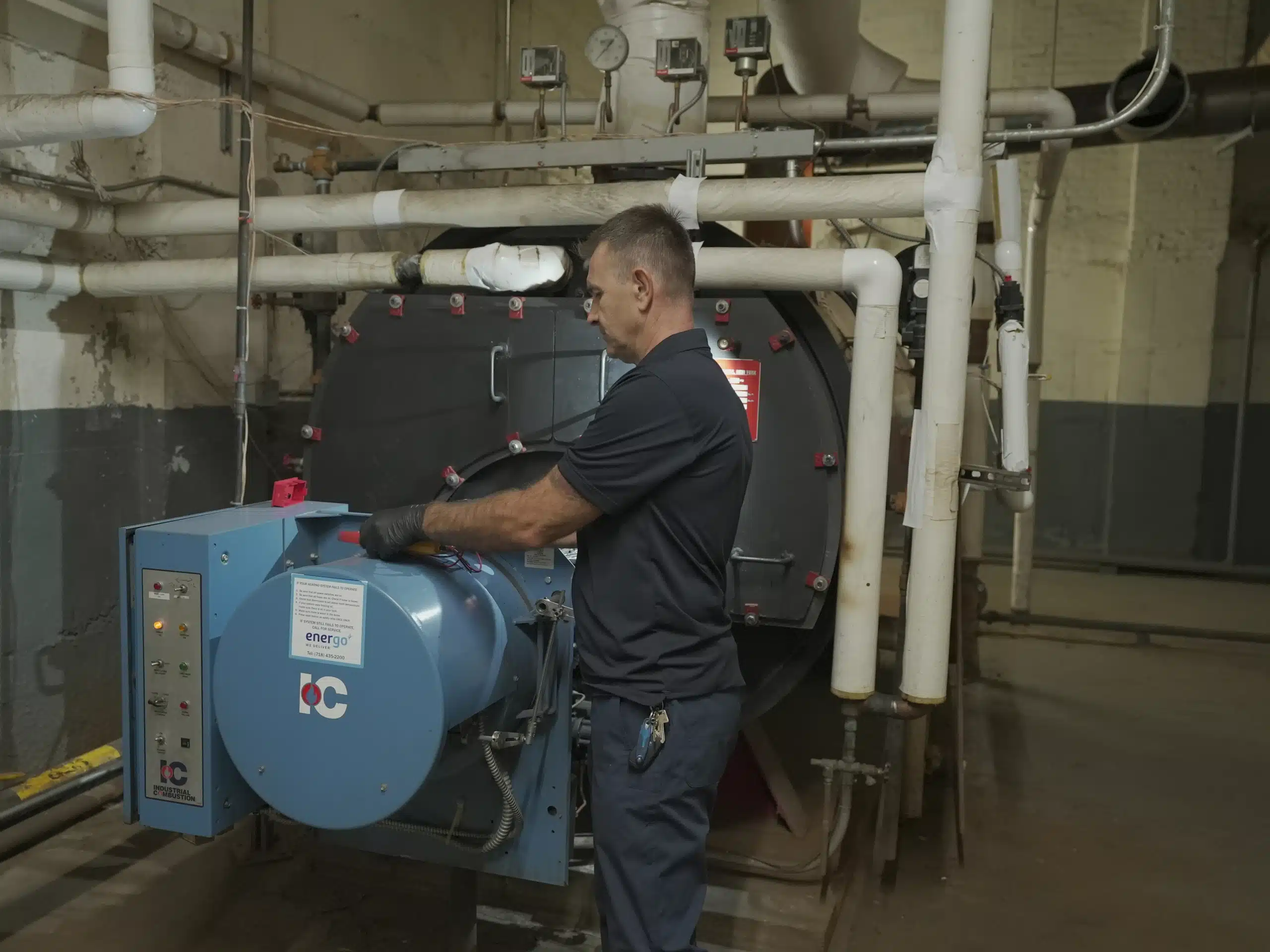

Energo’s team of in-house Licensed Master Plumbers and trained technicians are certified and fully equipped to perform Local Law 152 inspections and file all necessary paperwork to ensure compliance.
In New York City, LL152 compliance is scheduled by community district on a 4-year cycle. Missing your assigned window can lead to expensive fines, even if your building has no gas piping.
NYC has divided the inspection schedule across four years, with each community district assigned a specific year in the cycle. Every four years, your building is due again.
If you’re unsure which community district your building is in, the NYC Department of City Planning offers a lookup tool to help you find it.
For more guidance, check out Energo’s full breakdown of Local Law 152.
Missing your LL152 deadline can trigger a violation notice and a $5,000 fine. The Department of Buildings is strict about timing, and extensions are rare. NOTE: If your building has no gas piping, you still must file a no-gas certification by the same deadline.
If you miss your deadline, contact a licensed master plumber (LMP) immediately to schedule an inspection. Submitting the inspection late is better than not submitting at all.
If your deadline is approaching, prepare early by checking access points, gathering building records, and scheduling with your service provider.
Our inspection is thorough but non-invasive. If issues are found, they must be addressed within a set timeline to avoid penalties. Energo’s team of LMPs will:
This inspection isn’t just a requirement — it’s a vital part of keeping your building safe and compliant. Let our certified experts handle it with care and professionalism. Contact us to get started today.
Call: 888-378-9898




Should I Switch From Will-Call to Automatic Heating Oil Delivery?
Quick answer: If you would rather have your heating oil provider manage your refill schedule instead of checking the tank and placing each order yourself, switching from will-call to automatic heating oil delivery may make sense.
Can You Get a Local Law 87 Extension? NYC’s October 1 Deadline Explained
If your New York City building is due for Local Law 87 compliance this year and the energy audit or retro-commissioning work is not going to be finished by December 31, you may have another option.