Recurring pressure loss can involve a water leak, a relief valve that has discharged, an expansion-tank problem, a makeup-water component or an inaccurate gauge. The reading alone cannot identify the cause.
This question applies primarily to closed-loop hot-water boiler systems. Steam boilers operate differently and should not be evaluated using hot-water boiler pressure guidance.
What Does the Pressure Reading on a Boiler Mean?
In a hot-water heating system, the boiler and connected piping contain water under pressure. That pressure helps keep the system filled and allows heated water to circulate through radiators, baseboards or other heating equipment.
Water expands as it heats and contracts as it cools. A properly operating expansion tank gives that changing water volume somewhere to go, helping keep pressure changes within the range intended for the system.
Hydronic-equipment manufacturer Caleffi explains how expansion tanks, pressure-relief valves and makeup-water components work together in a closed-loop heating system.
The appropriate pressure is not identical for every home or boiler. Building height, equipment design, temperature and manufacturer requirements all matter. Use the boiler manual and the system’s established operating pattern rather than applying a generic number found online.
Is It Normal for Boiler Pressure to Change?
Some movement can be normal on a hot-water system. The pressure may rise as the boiler heats the water and fall again as the system cools.
The more useful question is whether the reading returns to its usual cold-system level or continues dropping over time.
A one-time difference between a hot reading and a cold reading does not necessarily indicate a leak. A continuing downward trend, especially over several heating cycles or days, deserves attention.
Why Does Boiler Pressure Keep Dropping?
Several conditions can produce the same symptom. A technician needs to evaluate the complete system rather than replacing a component based only on the gauge reading.
Water Is Escaping From the Heating System
A hot-water heating system can lose pressure when water escapes through a pipe connection, valve, circulator, radiator, baseboard, boiler section or another component.
Some leaks are obvious. Others evaporate on a hot surface, occur only while the system is operating or leave little more than staining, corrosion or mineral residue.
A small leak can still matter if it continues long enough. Note any damp areas, water stains or new corrosion you can see without removing covers or touching hot equipment.
The Pressure-Relief Valve Has Discharged
A boiler pressure-relief valve protects the system if pressure rises too high. If it opens, water leaves the system. The boiler may then show lower pressure after it cools.
Water near the relief-valve discharge pipe does not automatically mean the valve itself is the original problem. Excessive pressure, an expansion-tank issue or another system condition may have caused it to open.
Do not plug, cap or attempt to defeat a relief valve. Have the cause of the discharge evaluated.
The Expansion Tank Is Not Managing Water Expansion Properly
The expansion tank provides an air cushion for water as it expands during heating. If the tank is waterlogged, incorrectly charged, isolated from the system or otherwise not functioning properly, pressure may rise too far while the boiler is hot.
The relief valve may discharge water during that high-pressure period. Once the system cools, the gauge can then show low pressure.
This can create a pattern in which pressure appears high when the boiler is operating and unusually low later. Expansion-tank testing and adjustment should be handled by a qualified heating professional.
The Makeup-Water System Is Not Maintaining Pressure
Many closed-loop hot-water systems have components that admit a controlled amount of water when system pressure needs to be restored.
If the water supply is closed, a screen is restricted or a pressure-reducing or fill component is not operating correctly, the system may not replace minor water losses as intended.
The opposite problem is also possible. A fill component that admits too much water can contribute to excessive pressure and relief-valve discharge. That is why repeatedly changing valves or adding water without a diagnosis can make the situation harder to understand.
An Air Vent, Seal or Connection Is Weeping
Small amounts of water can escape from automatic air vents, valve packing, pump seals, flange connections and other system components.
Caleffi’s hydronic troubleshooting guidance recommends looking for evidence such as water staining, piping weepage or signs that a relief valve has discharged. These observations are useful, but repair work should be based on a complete assessment.
The Gauge May Not Be Reporting Accurately
A pressure gauge can become inaccurate or respond slowly. If the boiler appears to operate normally but the reading changes abruptly or does not respond as expected, the gauge and its connection may need to be checked.
Do not assume the gauge is defective, however. A professional should compare the displayed reading with the actual system condition.
Can a Boiler Lose Pressure Without a Visible Leak?
Yes. Water may escape only when the system is hot, evaporate before forming a puddle or leave through a relief-valve discharge pipe in a location that is not immediately noticeable.
A leak may also be located in concealed piping or a part of the system that is difficult to inspect.
If pressure continues falling, the absence of a visible puddle does not prove that the system is sealed. Record how quickly the pressure changes and whether the pattern occurs while heating, cooling or both.
Can Low Boiler Pressure Cause Cold Radiators or No Heat?
Low pressure can interfere with water circulation in a hot-water heating system. Depending on the equipment, a safety control may also prevent normal operation.
If the boiler appears to operate but rooms are not warming, the pressure reading is only one clue. Circulators, zone valves, controls, trapped air and other distribution problems can produce similar symptoms.
Our guide to a boiler running while radiators stay cold explains how the location and pattern of the heating problem can help inform a service call.
Is This the Same as Pressure Loss on a Steam Boiler?
No. Steam and hot-water boilers use pressure differently.
A steam boiler normally includes a steam pressure gauge, pressure controls, a gauge glass for the water level and a low-water cutoff. Its pressure can move back toward zero after a heating cycle without indicating the same problem as falling fill pressure in a closed-loop hot-water system.
Weil-McLain’s oil-fired steam boiler manual, for example, identifies the pressure gauge, gauge glass, low-water cutoff and pressure control as separate components.
If you are not sure which kind of system you have, our explanation of the difference between a boiler and a burner provides a useful starting point. A technician can then identify whether your distribution system uses steam or circulating hot water.
Do not add water to a steam boiler or adjust its pressure control based on advice intended for a hot-water boiler.
What Can You Check Safely Before Requesting Service?
You do not need to diagnose or repair the system yourself. A few observations can make the service call more productive:
- Photograph the pressure reading when the boiler is cool and again during a normal heating cycle.
- Note how quickly the pressure falls and whether it returns to the same reading each day.
- Look from a safe distance for dampness, water staining or corrosion around visible piping, radiators and the boiler.
- Check whether water is visible near the relief-valve discharge location, without touching the valve or hot piping.
- Record any error code or warning shown on the normal boiler display.
- Note whether the whole home, one zone or individual radiators are affected.
- Tell the service team if the system was recently drained, serviced or modified.
Avoid opening boiler panels, adjusting pressure controls, operating unfamiliar fill valves, draining the system or repeatedly adding water as an experiment.
Should You Keep Adding Water When Boiler Pressure Drops?
Do not make repeated water additions a routine response to continuing pressure loss.
Adding water may temporarily change the gauge reading without correcting the underlying leak, expansion problem or control issue. It can also erase useful evidence about how quickly the system is losing pressure.
Follow the manufacturer’s instructions for your specific boiler and ask a heating professional what should be done for your system. If you have already added water, tell the technician how often and approximately when.
When Should You Request Boiler Service?
Request professional service when:
- Pressure continues falling over several heating cycles.
- You need to add water repeatedly.
- The boiler displays a low-pressure or low-water fault.
- Water is leaking or the relief valve appears to have discharged.
- The home is not heating properly.
- The boiler starts and stops more frequently than usual.
- You hear a new banging, rushing or other unfamiliar sound.
If frequent cycling is part of the problem, read our guide explaining why a boiler may keep turning on and off.
If you smell gas, a carbon monoxide alarm sounds, or you see smoke or fire, leave the property and call 911 from a safe location. Do not stay inside to inspect the boiler. New York City provides additional carbon monoxide safety guidance.
Does Falling Boiler Pressure Mean the Boiler Must Be Replaced?
Not necessarily. The cause may be a repairable leak, expansion-tank issue, valve, gauge or system component rather than a failed boiler.
Replacement becomes a broader decision based on equipment condition, age, repair history, reliability and the cost and scope of the needed work. Pressure loss by itself is not enough to make that decision.
Energo provides residential heating repair and maintenance for boilers and other home heating systems throughout Brooklyn, Queens, Manhattan, the Bronx, Staten Island, Westchester and Nassau County.
Frequently Asked Questions About Boiler Pressure Loss
Is it normal for boiler pressure to drop when the system cools?
A small decrease may be normal as water cools and contracts. The reading should generally return to the system’s usual cold operating range. Pressure that continues falling over time or requires repeated water additions needs professional evaluation.
Why does my boiler lose pressure overnight?
The boiler may simply be cooler when you check it in the morning, but a continuing overnight decline can also involve a leak, relief-valve discharge, an expansion-tank problem, a makeup-water component or an inaccurate gauge. Compare readings under similar temperature conditions.
Can a boiler lose pressure without a visible leak?
Yes. Water can escape only while the system is hot, evaporate on a warm surface, leave through a relief-valve discharge or leak from concealed piping. No visible puddle does not rule out water loss.
Should I keep adding water if boiler pressure falls?
No. Repeatedly adding water can conceal the pattern without correcting the cause. Follow the boiler manufacturer’s instructions and have recurring pressure loss evaluated.
Can low boiler pressure cause no heat?
It can. Low pressure may interfere with circulation or cause a boiler control to prevent normal operation. Other circulation and control problems can produce similar symptoms, so the system should be diagnosed as a whole.
Is boiler pressure the same on steam and hot-water systems?
No. Steam and closed-loop hot-water boilers use pressure differently and have different controls. Do not apply hot-water boiler fill-pressure advice to a steam system.

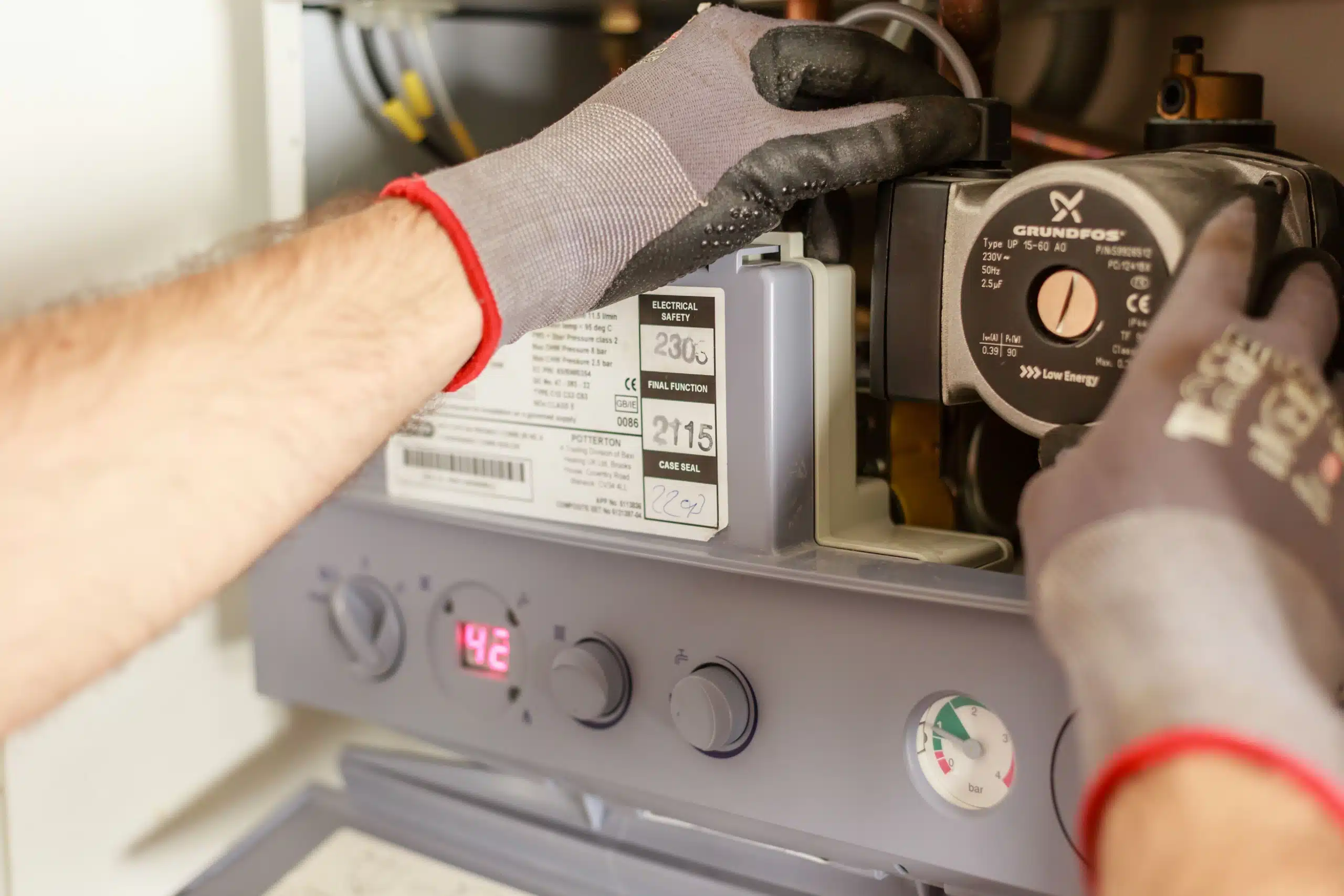





Why Does My Boiler Pressure Keep Dropping?
Boiler pressure dropping? Learn what normal changes look like, what may cause recurring pressure loss and when to request professional service.
How Much Heating Oil Does a House Use Per Day in Winter?
Learn how much heating oil a home may use each day in winter, what affects consumption, and how to estimate your own usage and plan your next delivery.