What does a boiler tune-up actually include?
A proper boiler tune-up is more than a quick look. A technician working through a full tune-up will clean the burner assembly and heat exchanger, check and adjust combustion settings for efficiency, inspect the flue and venting for blockages or damage, test safety controls and pressure relief valves, check the circulator pump and expansion tank, look for signs of corrosion or leaks, and verify that the thermostat and aquastat are calibrated correctly.
The goal is twofold: catch anything that could cause a breakdown before heating season, and make sure the system is running as efficiently as possible. A boiler operating outside its optimal combustion settings burns more fuel for the same amount of heat — which shows up in your oil or gas bill every month.
What factors affect the cost in NYC?
Fuel type matters. Oil-fired boilers typically cost more to tune up than gas-fired systems because cleaning the burner and heat exchanger after an oil combustion season is more involved. A full oil boiler tune-up, including nozzle and filter replacement, will usually run toward the higher end.
System age and condition affects scope. An older boiler that hasn’t been serviced recently may need more cleaning time, additional adjustments, or minor parts replaced during the visit. A well-maintained system in good condition is a faster job.
Steam vs. hot water changes what gets checked. Steam boilers have additional components — low water cutoffs, steam traps, vents — that need inspection and sometimes replacement. Hot water systems are generally simpler. In NYC, steam systems are common in older brownstones and pre-war buildings, and they require a technician who knows them well.
Parts are separate from labor. The base tune-up cost covers labor and standard consumables like nozzles and filters for oil systems. If something needs replacing — a circulator pump, a pressure gauge, a zone valve — that’s additional.
Service agreement vs. one-time tune-up — which makes more sense?
A one-time tune-up makes sense if you’re a new homeowner who wants to understand your system before committing to anything, or if you’ve just moved into a home and don’t know the service history.
A residential service agreement makes more sense for most homeowners who plan to stay in their home and want predictable costs. A good service agreement covers your annual tune-up, priority scheduling, and protection against the cost of covered repairs — which can run well above the cost of the plan itself in a bad year. When you factor in the tune-up that’s already included, the incremental cost of the agreement is often smaller than it looks.
The practical question is: what happens if something breaks in January? A homeowner on a service agreement has a defined path. A homeowner on a one-time tune-up is booking a service call at peak-demand pricing in the middle of heating season.
When should you schedule a boiler tune-up in NYC?
Spring is the right time for most NYC homeowners — specifically April through June. Boiler problems that developed quietly over the heating season often surface in early spring, when the system is still running but the weather is mild enough that an issue isn’t an emergency. Catching those problems now costs less and causes far less disruption than discovering them in October.
Scheduling in spring also means you’re ahead of the fall rush. HVAC and boiler service books up fast in September and October as building owners and homeowners scramble before the cold hits. Spring appointments are easier to get, and there’s no urgency driving the timeline.
If you missed the spring window, early September is the next best option — enough time to address anything found before you need the system daily.
Signs your boiler may need more than a tune-up
A tune-up handles maintenance and optimization. It’s not a repair visit, and a good technician will tell you honestly if something bigger is going on. A few things worth watching before the appointment:
If your boiler is making unusual noises, cycling on and off more than it should, producing uneven heat across rooms, or showing visible corrosion or water staining around the unit, mention those specifically when you schedule. They’re not necessarily deal-breakers, but they change what the technician is looking for and may affect the scope of the visit.
A boiler that’s more than 20–25 years old and requiring frequent repairs may be approaching the point where replacement makes more financial sense than continued maintenance. A tune-up visit is a reasonable opportunity to have that conversation with a technician who can assess the actual condition of the equipment.
How Energo handles boiler tune-ups and maintenance
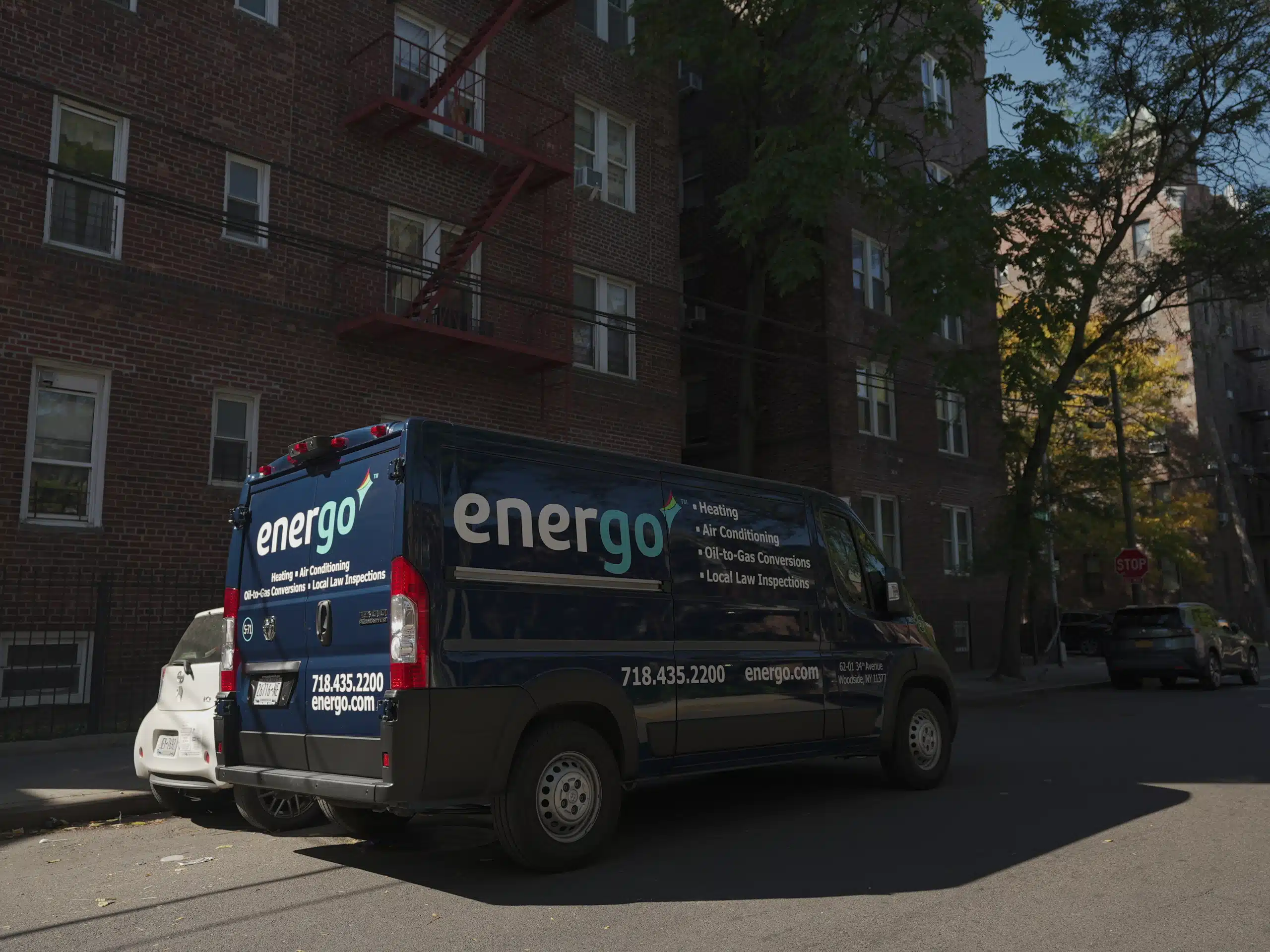
Energo’s residential heating maintenance services cover boiler tune-ups, inspections, and repairs for oil and gas systems throughout the five boroughs, Westchester, and Nassau. Work is performed by fully trained, NORA-certified technicians with experience across all major boiler makes and models, including the steam systems common in NYC’s older housing stock.
Service runs 365 days a year, seven days a week. If you’re ready to schedule a tune-up or want to learn more about service agreement options, reach out before the spring window closes.





How to Read a Heating Oil Tank Gauge: What Full, 3/4, 1/2 and 1/4 Mean
Most traditional heating oil tank gauges show your fuel level as a fraction, usually Full, 3/4, 1/2, 1/4 and Empty. The indicator inside the gauge moves down as your heating oil level falls.
Capped vs. Fixed Heating Oil Pricing: Which Should You Choose?
Capped heating oil pricing sets a maximum price per gallon while allowing you to pay a lower price when the plan’s pricing formula falls below that ceiling. Fixed heating oil pricing locks in one per-gallon rate for the agreed term, even if market prices rise or fall.