Dependability, response time, and scheduling discipline
NYC access logistics can make or break a service call: tenant coordination, roof keys, elevator reservations, co-op rules, and building insurance requirements all affect whether the technician can actually diagnose and complete work. A reliable provider will describe how they schedule around those constraints and will commit to clear timing expectations. New York State’s consumer guidance highlights why written start/completion dates and contingencies matter: they reduce confusion and disputes when timelines slip.
Before you book, verify the “service mechanics”:
- Emergency service and triage: Do they offer emergency service, what qualifies, and how after-hours calls are handled?
- Response-time reality: What’s the typical window for your borough/building type, and how are delays communicated?
- Communication and scheduling: Do you get confirmations, arrival notifications, and a written service summary?
- Building readiness: Are they used to COI requests, access notes, and coordination with supers or managing agents?
- Seasonal readiness is part of reliability. Annual tune-ups and pre-season checks are a simple way to reduce failures when systems are under stress, and ENERGY STAR recommends yearly HVAC tune-ups as a basic efficiency and comfort practice.
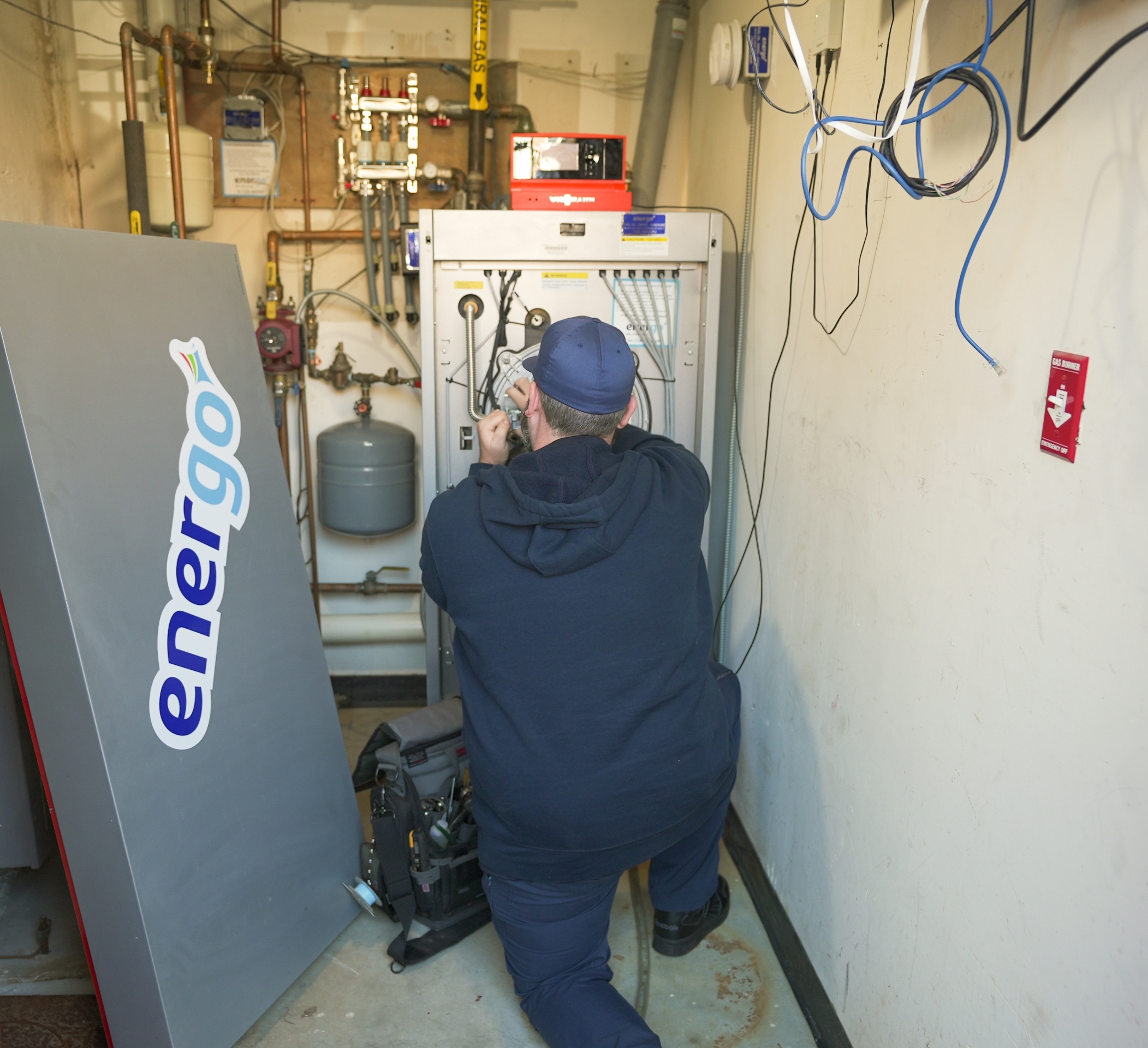
A small example of dependable process: Energo typically provides a short post-visit recap (tests performed, findings, and next steps), which is especially useful for property managers tracking recurring issues across units.
Diagnostic thoroughness over patch repairs
Most “ongoing HVAC problems” are not mysterious—they’re undiagnosed. Reliable HVAC service is methodical: verify the sequence of operation, confirm airflow and drainage, check electrical components, and use measurements to support the diagnosis. That mindset mirrors U.S. Department of Energy guidance on HVAC commissioning, which emphasizes proving systems operate as intended rather than assuming they do.
This is where you should insist on maintenance versus patch repairs. Maintenance tackles the conditions that make systems fail repeatedly (dirty filters, restricted airflow, coil buildup, blocked condensate), while patch repairs often just restore operation. The Department of Energy notes that clogged filters reduce airflow and system efficiency and can contribute to premature failure—exactly the kind of underlying issue that comes right back if it’s not addressed.
Refrigerant work is another reliability tell. Technicians handling regulated refrigerants must hold Environmental Protection Agency Section 608 certification. And for larger comfort-cooling equipment with significant refrigerant charge, federal leak rules set trigger rates and corrective-action timelines.
A simple question that reveals a lot: “What test result confirms that diagnosis?” If there’s no clear answer, expect more repeat calls.
Licensing, certifications, insurance, and technician vetting
For many residential jobs, licensing is not optional. Start by confirming that the contractor is properly licensed before you compare quotes, especially if your building requires a licensed vendor list.
If the work involves permits or other DOB-regulated trades, check that the company can also meet filing and insurance requirements for that type of job.
Technician qualifications matter because they influence both safety and outcomes. For refrigerant work, EPA Section 608 certification is essential. Skills-based credentials such as North American Technician Excellence (NATE) can also be a positive sign that a technician has been tested on core knowledge and practices.
Insurance and warranties are the other half of reliability. Ask for proof of insurance, workers’ compensation documentation, and clear warranty terms before work begins. That is especially important for property managers and owners who need to document vendor compliance.
Customer reviews and local reputation should support your decision, not make it for you. Look for patterns in feedback, such as missed appointments, repeat failures, unclear billing, or strong follow-through. It also helps to confirm that the company has experience with your type of property, whether that is a prewar co-op, mixed-use building, brownstone, or small commercial space.
When technicians are entering occupied units, hiring practices matter too. Ask whether the people doing the work are employees or subcontractors, whether they arrive with identification, and whether background checks are part of the company’s process. If subcontractors are used, it is worth confirming that they are properly qualified for the work being performed.
This keeps the same ideas, but makes it read more like one section instead of four stacked notes.
Transparent pricing, parts readiness, and OEM compatibility
Transparent pricing is a practical reliability signal: it reduces disputes and makes future repairs easier to manage. NYC consumer guidance encourages getting written estimates, and state guidance explains that written contracts for larger home-improvement work should include timelines, materials details (including identifying information like make/model), and agreed pricing.
A reliable estimate or proposal should show, at a minimum:
- Clear scope and exclusions (what’s included, what isn’t).
- Itemized materials/equipment with identifying details when relevant to compatibility and ordering.
- Parts availability plan: lead times, sourcing approach, and how backorders are communicated.
- Written change-order process: NYC’s model contract forms require written change orders for additional work, including the new total cost and when payment is due.
- Warranty terms in writing for both labor and parts.
If a provider can’t explain how they confirm OEM compatibility (or equivalent, spec-matched parts) for your exact model, you’re more likely to face delays—or repeat visits because the wrong part was ordered.
Preventive maintenance plans, energy efficiency, and NYC code compliance
Preventive maintenance plans are often the “quiet” reason some buildings have fewer system failures. ENERGY STAR recommends basics like changing filters and getting yearly tune-ups, and the Department of Energy notes that restricted airflow and dirty components reduce efficiency and can shorten equipment life.
For property managers and small-commercial owners, look for a plan that is scheduled, checklist-driven, and documented.
Code compliance is the final reliability filter. The New York City Energy Conservation Code sets energy-related requirements, and permits may be needed for installation or alteration of heating/ventilation systems. Meanwhile, NYC Buildings guidance notes that common window A/C installations are generally exempt from permits under specified conditions—useful context when you’re planning work or comparing estimates.
If you want a simple next step, build a one-page “system profile” (model/serial numbers, maintenance history, recurring symptoms, and access notes) and share it in advance. Providers who welcome that documentation tend to deliver more reliable HVAC service over time because they start from facts, not guesswork.







Can You Install Solar Panels on an NYC Apartment or Condo?
Solar panels may be possible for an NYC apartment, condo or co-op, but an individual resident usually cannot claim part of a shared roof and install a system independently. The building owner, condo association or co-op board generally needs to approve and lead the project.
How to Read a Heating Oil Tank Gauge: What Full, 3/4, 1/2 and 1/4 Mean
Most traditional heating oil tank gauges show your fuel level as a fraction, usually Full, 3/4, 1/2, 1/4 and Empty. The indicator inside the gauge moves down as your heating oil level falls.