Do you need whole-home backup or just essential circuits?
This is usually the first and most important decision.
Some homeowners want a generator that can support most or all of the home during an outage. Others are focused on essentials such as refrigeration, lighting, internet, select outlets, security systems, or key heating equipment. Both approaches can make sense. The right choice depends on your priorities, budget, and how much disruption you are trying to avoid.
Whole-home backup is often the better fit if you want a more seamless experience and do not want to constantly think about what can and cannot run. An essentials-based setup may make more sense if your main goal is protecting the most important systems without sizing for the entire house.
A good generator recommendation should start with that conversation, not with a generic size chart.
What size backup generator does your home actually need?
Generator sizing should be based on your home’s real power needs, not guesswork.
A smaller home with a modest list of essential loads may need a very different setup than a larger home with central air, more appliances, or equipment that draws significant startup power. Heating and cooling equipment, refrigerators, freezers, pumps, cooking appliances, and water heaters can all affect sizing.
This is where many homeowners get tripped up. It is not just about how many things you want to run. It is also about which systems have higher electrical demands when they start.
That is why it helps to think in terms of categories:
- Must-have systems you want available during every outage
- Nice-to-have systems you would prefer to keep running
- High-demand equipment that may change the size of the unit needed
If a company jumps straight to a model recommendation without discussing your electrical load and priorities, that is a red flag.
Is natural gas or propane better for a standby generator?
Both can be good options. The better fit depends on the home.
Natural gas is often appealing because it connects to a utility line, which can make it convenient for homeowners who want a steady fuel source without managing onsite fuel storage. Propane can also be a strong option, especially when natural gas is not the best match for the property or installation.
The mistake is assuming one fuel is always better. Fuel choice affects installation planning, placement, ongoing use, and the overall design of the system. It should be evaluated as part of the full project, not as an afterthought.
For many NYC-area homes, fuel availability and site conditions will help narrow the answer quickly.
Why does an automatic transfer switch matter?
If you are looking at a true standby generator, this matters a lot.
An automatic transfer switch detects a loss of utility power and signals the generator to start. It also helps transition power safely from the grid to the generator. In practical terms, that means your backup system responds automatically instead of relying on a manual workaround.
That convenience is one of the biggest differences between a professionally installed standby generator and a more limited backup approach. For homeowners who want reliable home backup power without scrambling during an outage, it is a key part of the system.
What should NYC homeowners think about before generator installation?
In the NYC area, installation is not just about the generator itself. The property matters.
Space constraints, placement options, access, surrounding structures, and code requirements can all affect the project. A home with a tighter lot, attached neighbors, or less flexibility around equipment placement may require a different installation approach than a property with more room.
That is one reason generator planning should happen before you settle on equipment. The best unit on paper may not be the best fit once site conditions are considered.
A proper assessment should look at:
- Where the unit can be placed
- How the electrical connection will be handled
- How the fuel source will be integrated
- What local requirements may affect the installation
For homeowners in dense neighborhoods, that planning step is especially important.
What happens during a professional generator installation?
A professional installation should feel structured, not improvised.
It usually starts with a site visit and a conversation about what you want the generator to cover. From there, the project moves into system selection, placement planning, electrical coordination, fuel coordination, installation, testing, and final walkthrough.
That matters because a standby generator is not just a product purchase. It is a home power project that needs to be installed correctly from day one.
Why do many homeowners choose a Generac standby generator?
Brand matters, but support matters too.
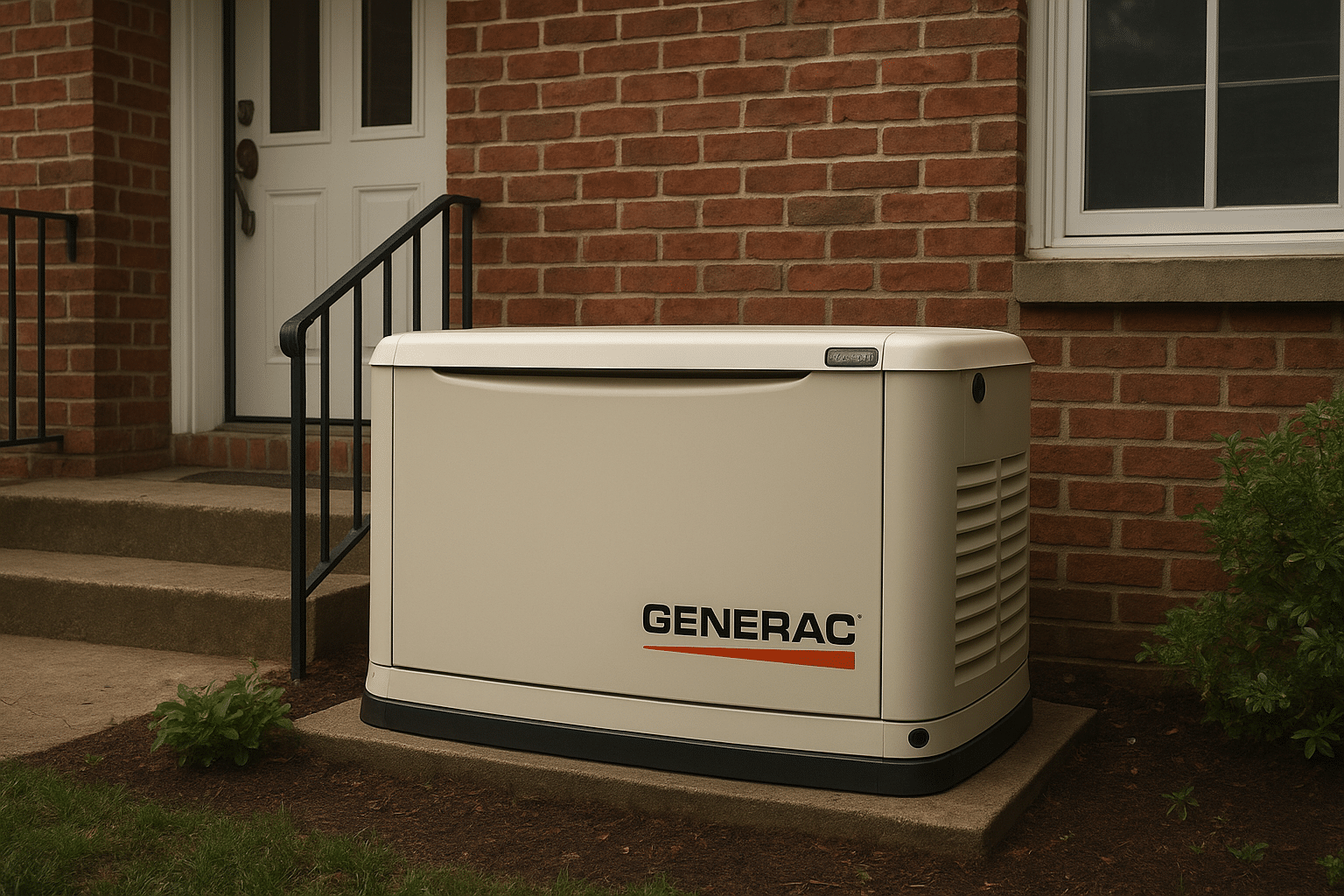
For many homeowners, Generac generators is a familiar name in residential backup power. When paired with professional installation, the right system can provide dependable backup power and greater peace of mind during outages.
For homeowners, that combination tends to matter more than brand alone. You want equipment you trust, but you also want a partner that can recommend the right unit, install it properly, and support it over time.
How do you choose the right generator company?
Not every generator company approaches these projects the same way.
A good partner should help you think through the real decisions instead of pushing a one-size-fits-all answer. That includes an explanation of different generators, coverage goals, load planning, fuel considerations, installation conditions, and long-term support.
You should also look for a company that can clearly explain:
- What the recommended system will power
- Why that size makes sense
- What the installation includes
- What happens after install if you need service or support
The right generator is the one that fits your home, not just the outage
The best whole-home backup generator is not simply the biggest unit or the most popular model. It is the one that matches your home, your priorities, and your installation conditions.
For some homeowners, that means broad coverage and minimal interruption. For others, it means protecting the systems that matter most and building from there. Either way, the process should start with real planning, not generic advice.
If you are exploring home generators in NYC, the smartest next step is to get a recommendation based on your home’s layout, power needs, and backup goals.
Need help choosing the right generator for your home?
Energo sells, installs, services, and repairs residential backup generators and offers professionally installed Generac standby generators for homeowners across the NYC area and beyond.







Why Does My Boiler Keep Turning On and Off? Short Cycling Explained
A boiler that repeatedly starts and stops can have several causes, from changing heating demand to thermostat, circulation or control problems. Learn what short cycling means, what you can safely observe and when to request professional help.
Can You Install Solar Panels on an NYC Apartment or Condo?
Solar panels may be possible for an NYC apartment, condo or co-op, but an individual resident usually cannot claim part of a shared roof and install a system independently. The building owner, condo association or co-op board generally needs to approve and lead the project.