Many high-rise buildings in NYC are equipped with dual-fuel boiler systems. In these setups, the boiler can burn natural gas under most conditions, but it also has the capability to burn No.2 heating oil as needed. Why go through the expense of maintaining two fuels? Because gas utilities in New York operate “interruptible” service contracts for large users. On the coldest days when demand for natural gas spikes, the utility (like Con Edison or National Grid) may temporarily cut off gas supply to big commercial customers. Residential customers and critical services get priority on the gas system, while certain high-rises agree to switch to oil heat in exchange for lower gas rates the rest of the year.
It’s a practical way to reduce strain on the gas network during a polar vortex. In fact, on an interruptible system, gas is used about 95% of the time, but “on very cold days when gas demand is high, the utility will shut off the gas and require the high-rise building to use No.2 oil until peak usage subsides.” This arrangement ensures the building can keep the heat on no matter what’s happening with regional gas supply. Even buildings with firm (non-interruptible) gas service might keep an oil backup. Natural gas systems in NYC can face pressure drops during extreme cold snaps if infrastructure is overstressed. By having an on-site oil supply, a high-rise can fire up its oil burners if gas pressure falls too low to meet the building’s heating load. Oil becomes an insurance policy – a readily available fuel stored right in the building’s basement tank, waiting to kick in if needed.
Heating Oil = On-Site Fuel Security
One key reason high-rises still rely on oil in winter is the security of having fuel on-site. Oil can be stored in large tanks (some buildings have tens of thousands of gallons in basement tanks or vaults). This means that even if roads are closed, gas lines are constrained, or power is out (for those on steam or electric heat), the building has a self-contained reserve of energy ready to go. During a severe blizzard or emergency, a building management team can increase oil deliveries ahead of time and effectively be self-sufficient for days or weeks. Gas supply, by contrast, is dependent on the external pipeline network and utility capacity.
For example, many NYC hospitals, schools, and high-rise residential towers maintain oil reserves explicitly for emergencies. If the gas grid ever struggles or a polar vortex causes record demand, these facilities seamlessly switch to oil and keep critical heat and hot water running. It’s a resilience strategy. In some cases, city regulations or insurance requirements for essential buildings mandate a backup fuel source on premises. It’s worth noting that Con Edison’s steam network (which supplies steam heat to many Manhattan high-rises) similarly doesn’t rely on each building’s boilers – but even Con Ed steam buildings often have a backup boiler that can run on oil. Why? Steam service is very reliable, but if there were ever a rare steam outage or needed maintenance, an oil-fired boiler can serve as a fallback to heat the building. Engineers design multiple redundancies for high-occupancy buildings; an oil system is a common solution.
Extreme Cold Poses Unique Challenges
In extreme cold, a high-rise heating system faces maximum stress. The outdoor temperature might be in the single digits (°F), wind whipping between skyscrapers, and every apartment thermostat cranked up. This is precisely when oil fuel shines as a dependable heat source:
- High BTU Output: Oil burners generate a lot of heat per gallon – No.2 heating oil packs about 139,000 BTUs per gallon, delivering intense heat output. In an extreme cold scenario, an oil-fired boiler can ramp to full fire and produce abundant steam or hot water to keep upper floors warm. Large boilers are often tuned to burn oil slightly hotter than gas, providing a performance edge in peak demand.
- No Supply Pressure Drop: Unlike natural gas, which can suffer pressure drops in distribution lines during high usage, oil is drawn from a tank on-site. There’s no such thing as an “oil pressure” issue – as long as the pumps can pull oil, the burner gets a steady fuel feed. This constant supply means stable boiler performance even at 0°F outside.
- Independence from Utility Constraints: During an extreme cold spell, utilities sometimes issue public pleas to conserve energy or, as mentioned, enact interruptible cut-offs. A building running on oil isn’t affected by those measures – it can burn its fuel as needed to maintain indoor temperatures. (Of course, they’ll need to monitor tank levels and have deliveries scheduled – automatic delivery service to commercial buildings is crucial in these cases to avoid running low when everyone else also needs oil.)
- Reliability of Equipment: Many dual-fuel high-rises periodically test-fire their oil burners throughout the year (especially in fall) to ensure that when the day comes, the oil system is ready. Oil equipment, when maintained, is very robust. Some building managers consider the oil burner their “diesel engine” – tough, capable of running continuously in harsh conditions. There is comfort in knowing that if the fancy electronic controls on a newer gas system falter, the simpler oil burner can be fired up manually if needed to keep heat flowing.
Real NYC Scenarios: Oil to the Rescue
Consider a scenario that’s actually quite common: A brutal cold front hits New York – say 10°F with howling winds – and gas usage across the city spikes overnight. National Grid or Con Edison triggers an interruptible event, notifying dozens of large buildings: switch to oil now.
In these moments, oil heat literally keeps thousands of high-rise residents from losing heat. The building staff receive the notice, they flip a boiler fuel selector, and now the giant boiler in the basement is roaring with flame from heating oil. Apartments stay warm, and the gas system can redirect supply to where it’s needed. After the cold snap passes (perhaps a day or two later), the utility gives the all-clear and the building switches back to gas. This happens routinely on the coldest winter nights – it’s a behind-the-scenes process most residents never notice, precisely because it works so smoothly when oil backup is available.
Another example: In January a nor’easter dumps snow and knocks out power in parts of Queens and the Bronx. A particular 30-story apartment building isn’t on Con Ed steam and normally uses natural gas. The power outage causes the gas boiler controls to fail (most modern boilers need electricity for controls even if they burn gas). However, this building had a secondary older pressure-operated oil burner that can run without the modern electronic controls. Maintenance staff get that oil burner running to provide minimal heat and protect the building’s pipes from freezing until power returns. The on-site oil (plus perhaps a generator for distribution pumps) makes the building much more resilient to the blackout. In contrast, a building with only a gas system might have had no heat until electricity came back.
Heating Oil in High-Rises: Here to Stay (for Now)
Between NYC’s Local Law 97 carbon emission rules and the push for cleaner energy, one might wonder if heating oil’s days are numbered. Indeed, the city is moving away from heavy oils and encouraging cleaner fuels. But in practice, for reliability during extreme cold, oil remains deeply entrenched in high-rise building operations. The cleaner Bioheat® (ultra-low sulfur heating oil with biodiesel) that is now required in NYC means buildings can use oil with a smaller environmental footprint.
As of 2026, all heating oil in NYC is B10 Bioheat, rising to B20 by 2030– so the backup oil these buildings burn is cleaner and renewable-fueled to some degree. Many boilers have been upgraded to dual-fuel with efficient burners that make switching seamless and lower emissions. Until there is a viable alternative for on-site, high-BTU backup fuel (down the road maybe battery storage or renewable diesel, etc.), heating oil will continue to be the go-to reliability fuel for skyscrapers. It’s simply too risky in a city like New York to not have a backup plan when life-threatening cold hits. High-rise property managers and co-op boards know this, which is why they keep those oil tanks filled by late December. It’s peace of mind in liquid form.
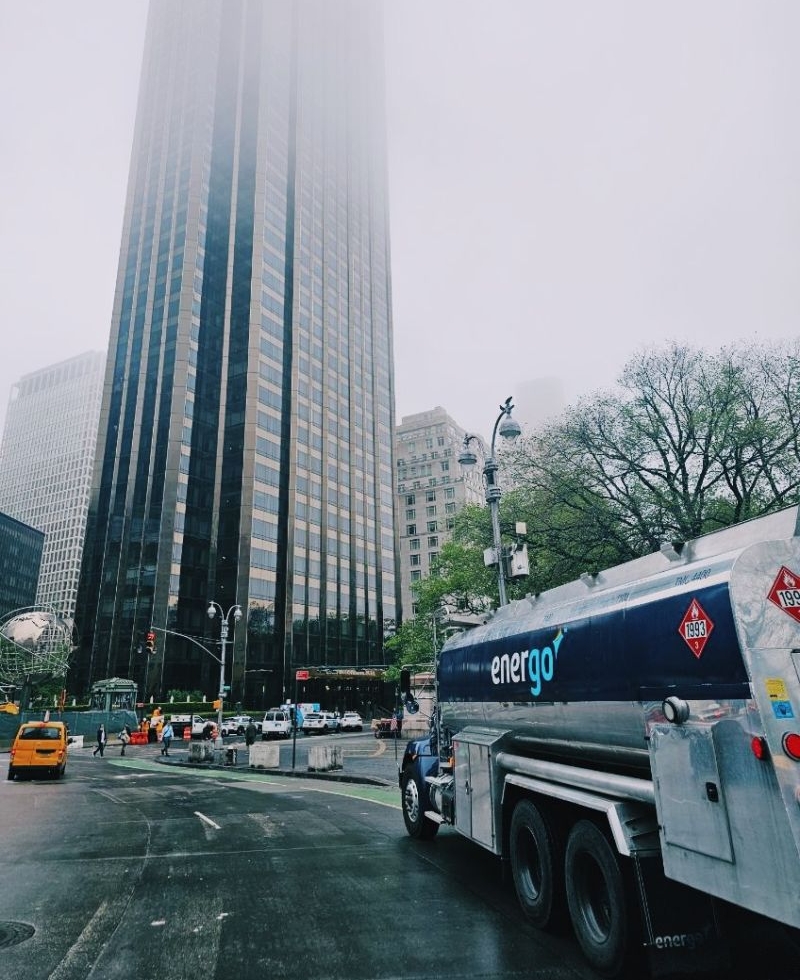
Energo’s Insight: Our team services many dual-fuel buildings in Manhattan, Brooklyn, and beyond. We deliver Bioheat fuel on automatic schedules to ensure tanks are ready for any interruptible event. We’ve seen firsthand how a sudden 5°F night can lead to a surge in oil usage in tall buildings – sometimes burning thousands of gallons in a single frigid night. With proper planning, those buildings stay warm and safe. Energo provides reliable high-rise heating oil delivery even during extreme weather, with priority service for our interruptible gas customers.
In the worst cold, our delivery logistics (including overnight deliveries if needed) ensure that NYC’s high-rises never run out of backup fuel when they need it most. So next time the temperatures plummet and the city is shivering, remember that behind the scenes, heating oil is often the unsung hero keeping the radiators toasty in those big buildings.





Local Law 84 Compliance Consulting: What NYC Property Managers Should Know
If you manage a covered NYC building, Local Law 84 is not “nice to have.” It’s a recurring compliance obligation with real administrative risk when filings are late, incomplete, or inaccurate. The hard part is not understanding the law in theory.
Is Your NYC Building 25,000 Square Feet or More? What It Means to Be a Covered Building in 2026
In New York City, 25,000 square feet is a legal sizing line used across major building energy and carbon laws. In 2026, being above it most often ties to three connected obligations: annual benchmarking under Local Law 84, annual public posting of an energy grade label under Local Law 33 as amended by Local Law 95, and annual greenhouse gas emissions reporting (and limits) under Local Law 97.